
Beyond 2030 Compliance: The Hospital Seismic Preparedness Gap
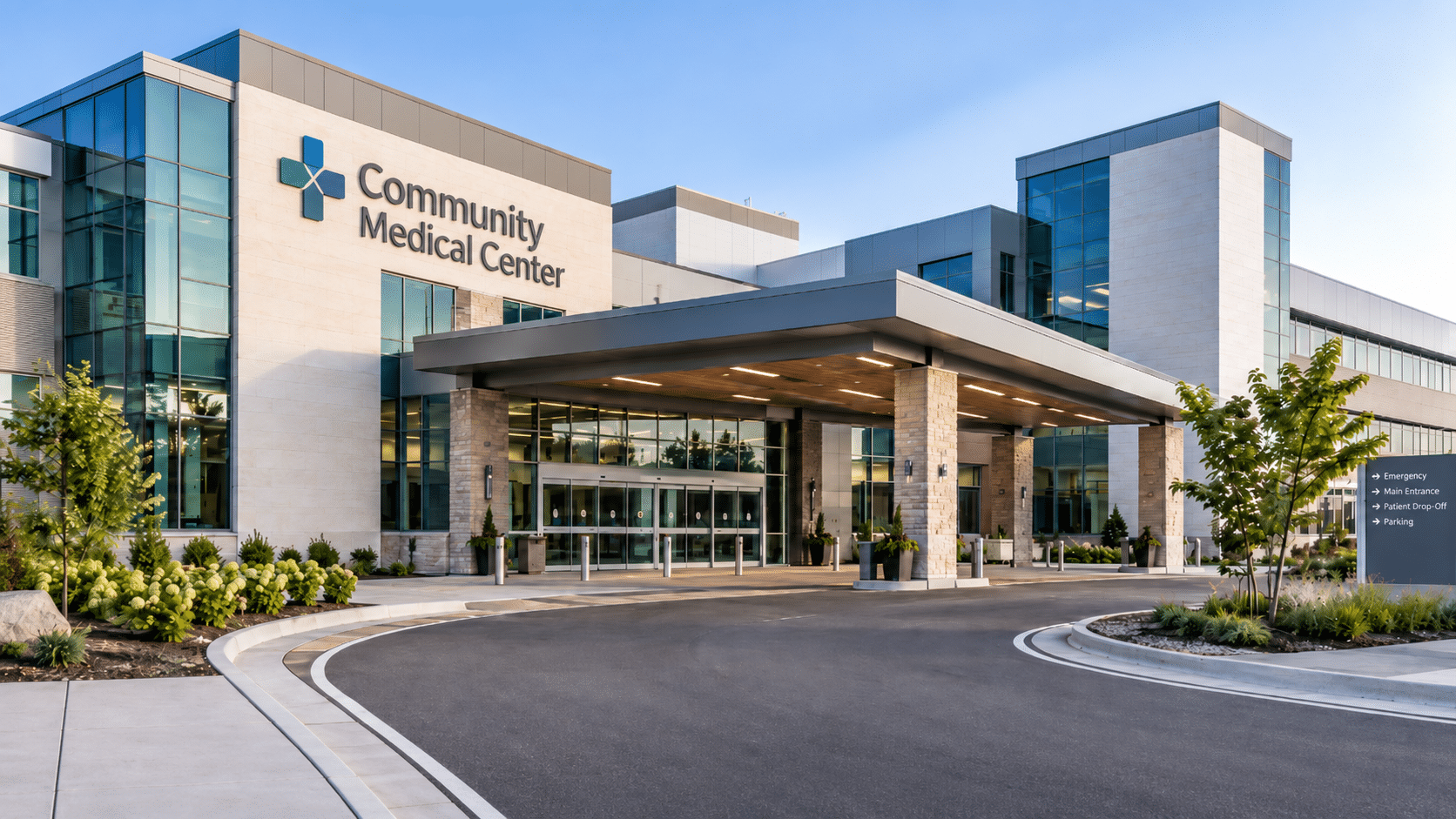
When a major earthquake strikes, hospitals are the facilities communities count on most, and they are expected to keep caring for patients while the systems around them are disrupted. In California, that expectation is written into law. By January 1, 2030, every general acute care hospital building must meet the state’s structural and nonstructural seismic performance standards. For many health systems, the deadline has driven years of planning, capital investment and construction.
Meeting the 2030 requirements is an important milestone, but it doesn’t make a hospital fully prepared. Compliance sets the minimum for how a building should perform. An effective emergency preparedness plan also has to account for how the whole hospital, including its systems, staff and leadership, will actually operate in the hours and days after the shaking stops.
What 2030 Compliance Requires
Under California’s hospital seismic safety law, administered by the Department of Health Care Access and Information (HCAI), every general acute care building must reach Structural Performance Category (SPC) 3, 4, 4D or 5 and Nonstructural Performance Category (NPC) 5 by 2030. At the California Hospital Association’s Disaster Preparedness Conference, Ali Sumer, Supervisor of Health Facilities at HCAI, compared the path to NPC 5 to putting together IKEA furniture. Building on that analogy, the nonstructural ratings look something like this:
- NPC 2: Can I exit the building? You can find your way out of the IKEA maze. People can get out safely, even if not much else works.
- NPC 3: Critical functions are protected. The must-have pieces are in your cart. The essentials are covered, but the job isn’t finished.
- NPC 4 / 4D: All the parts are in place. “The IKEA box has arrived at home and been built.”
- NPC 5: The facility has what it needs to keep functioning. “The IKEA chair is put in place within the existing environment.” The facility can sustain operations on its own for 72 hours.
Many facilities are on track structurally at SPC 3, 4 and 4D. The bigger hurdle is usually the move from NPC 4 to NPC 5, which requires 72 hours of onsite water, along with fuel, emergency power for critical areas and other emergency preparedness plans.
Where Compliance Falls Short
SPC and NPC ratings describe how individual buildings and their components should perform. They don’t fully capture how a hospital operates as a system. Hospitals seldom fail from structural collapse. More often, their operations fail as interconnected systems, either in sequence, compounding, or cascading.
A Missing Piece: Information After the Shaking
One of the most important gaps in many preparedness plans is what happens in the first minutes and hours after an earthquake. Following a major event, HCAI activates its Emergency Operation Center and contacts every facility to assess its status. It sends field teams, including contract inspectors, to the hardest-hit facilities, and assigns green, yellow or red tags to buildings. HCAI then helps facilities return to operation or, if they were evacuated, repopulate.
In a large earthquake, inspection resources will always be limited. To prioritize, HCAI works with the USGS and its ShakeCast system to focus first on the areas with the strongest estimated ground shaking. Regional estimates are a valuable starting point, but they can’t show how a specific building actually performed. Ground-truth data is scarce: according to HCAI, only about 80 of California’s roughly 3,000 hospital buildings have onsite seismic instrumentation. For most hospitals, decisions about whether a building is safe to occupy have to wait until an inspector arrives.
How Safehub Sensors Support Hospital Readiness
Until recently, instrumenting buildings across a hospital portfolio was expensive and complex. Safehub makes building-level earthquake data an attainable reality with low-cost wireless seismic sensors that install quickly on existing structures. Instead of relying only on federal regional shaking maps, Safehub sensors build upon this regional shaking data and also measure the shaking each building experienced to turn that data into building-level damage insights within minutes of an earthquake.
For hospitals, that means:
- Faster situational awareness: Facility and emergency leaders get objective, building-by-building information at the moment communication is most likely to break down.
- Smarter inspection priorities: Hospitals and HCAI field teams can focus limited inspection resources on the buildings most likely to be damaged.
- More confident re-occupancy decisions: Ground-truth data supports faster, better-informed decisions about which buildings can stay in use, reducing unnecessary downtime and speeding recovery.
- A long-term performance record: Data from each event builds a history of how buildings perform, which can inform future upgrades and preparedness planning well beyond 2030.
Looking Beyond 2030
The 2030 deadline will leave California’s hospitals on a much stronger seismic footing. But the goal was never just compliance. It is a hospital that stays open when its community needs it most. That takes resilient buildings, plans tested against realistic conditions, and the quick post-earthquake damage information to know how each building performed when it matters.